China Top 10 High Speed Bearings What Makes Them Suitable?

Time:2026-10-09 Author:Mason
0%

China’s high-speed bearing industry now serves machine tools, electric motors, turbochargers, robotics, and aerospace equipment. This growth reflects more than lower production costs. It shows stronger steel processing, cleaner manufacturing environments, and better inspection systems. However, brand reputation alone cannot confirm performance.

The question is practical: what makes a bearing suitable for high speed applications? Engineers usually examine limiting speed, preload control, lubrication, heat generation, vibration, and service life. A bearing may reach 30,000 revolutions per minute in a catalog, yet perform differently under real loads. A workshop test can reveal this quickly. Listen for rising noise. Check housing temperature. Review vibration data after several hours.

This guide introduces ten notable Chinese high-speed bearing manufacturers and product ranges. The selection considers material quality, manufacturing precision, sealing design, ceramic or hybrid options, and technical support. Some suppliers focus on precision machine tools. Others develop bearings for electric vehicle motors or industrial spindles. Their strengths are not identical.

Small details matter. A microscopic raceway defect can become a serious failure at high rotational speed. Poor grease selection can also raise temperature within minutes. For reliable purchasing, compare verified specifications, tolerance classes, test records, and application references. Independent certification may add confidence, but it should not replace engineering evaluation. The ranking may remain imperfect because product performance depends on load, installation, lubrication, and operating conditions. That limitation deserves attention. A suitable bearing is not simply the fastest one. It is the bearing that remains stable, cool, quiet, and predictable in its intended machine.
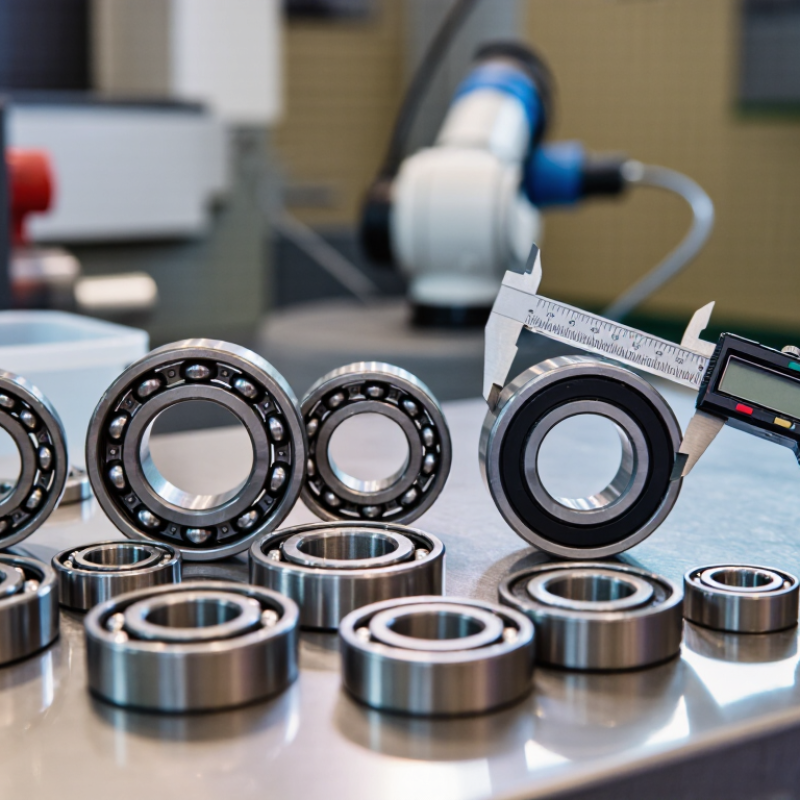
China Top 10 High Speed Bearings What Makes Them Suitable?

What Defines a High-Speed Bearing and Why China Matters

A high-speed bearing is not simply a bearing with a higher price. It must control friction, heat, vibration, and dimensional error at elevated rotational speeds. Engineers often use the DN value, calculated from bore diameter and revolutions per minute. However, no universal DN threshold defines “high speed.” Load, lubricant, cooling, preload, and cage design also matter.

ISO 281:2007 provides the L10 rating-life method, while ISO 492:2014 specifies bearing tolerance classes. These standards remind buyers to examine measurable performance, not marketing language. In practical testing, temperature rise and vibration can expose small defects. A bearing may appear smooth by hand but fail after hours near its operating limit. That gap deserves attention.

China matters because its manufacturing base combines large-scale production with a deep machining supply chain. The China Bearing Industry Association’s 2023 industry statistics reported domestic output above 26 billion bearing sets. Scale can improve process learning and shorten delivery times. It does not automatically guarantee high-speed reliability. I would check raceway roundness, steel cleanliness, cage balance, lubricant compatibility, and endurance-test records. Research reports also place Asia-Pacific at the center of bearing demand growth, driven by electric motors, machine tools, and industrial automation. Yet catalog data can remain incomplete. A serious comparison should request test speed, temperature curves, vibration limits, and failure analysis records before ranking China’s top ten high-speed bearings.

China Top 10 High-Speed Bearings: What Makes Them Suitable?
Rank Bearing Design Indicative Limiting-Speed Range
(rpm)
Typical Cage and Rolling-Element Materials Why It Is Suitable for High-Speed Operation Typical Applications Relevance to China’s Manufacturing Market
1 Single-Row Angular Contact Ball Bearing, Hybrid Ceramic 18,000–45,000 Steel rings; silicon-nitride balls; phenolic or high-performance polymer cage Reduced rolling-element centrifugal force, low friction, high rigidity, and reliable axial positioning at elevated speeds. Machine-tool spindles, precision electric motors, and high-speed pumps Well suited to China’s growing precision-machinery and automated-production sectors.
2 Single-Row Deep-Groove Ball Bearing, Hybrid Ceramic 15,000–40,000 Steel rings; silicon-nitride balls; low-friction polymer or steel cage Low mass, low torque, simple geometry, and the ability to carry combined radial and moderate axial loads. High-speed motors, fans, compressors, and laboratory equipment Compatible with large-volume domestic production of motors, appliances, and industrial equipment.
3 Double-Row Angular Contact Ball Bearing 8,000–20,000 Through-hardened bearing steel; steel or polymer cage Provides axial load capacity in both directions while maintaining compactness and good shaft-support stiffness. Robotics, servo gearboxes, textile machinery, and compact transmissions Suitable for China’s robotics, automation, and compact-drive manufacturing applications.
4 Paired Duplex Angular Contact Ball Bearings 12,000–35,000 Steel rings; steel or ceramic balls; precision polymer or phenolic cage Preloaded pairs improve axial stiffness, runout control, and positional accuracy in both directions. CNC spindles, inspection systems, precision actuators, and high-speed tooling Supports China’s demand for domestically assembled precision machine tools and automation systems.
5 High-Speed Cylindrical Roller Bearing 6,000–18,000 Hardened steel rings and rollers; brass, steel, or engineered-polymer cage High radial load capacity, strong stiffness, and an ability to accommodate limited axial displacement in suitable configurations. Electric motors, traction drives, gearboxes, and industrial compressors Relevant to China’s heavy-equipment, rail-transport, and industrial-drive supply chains.
6 Tapered Roller Bearing, High-Speed Optimized 3,000–10,000 Through-hardened steel; optimized steel or polymer cage Handles combined radial and axial loads, while optimized internal geometry and lubrication reduce heat generation. Automotive transmissions, wheel-end systems, and industrial gear units Matches China’s large automotive, commercial-vehicle, and transmission manufacturing base.
7 Needle Roller Bearing with Machined or Stamped Cage 4,000–15,000 Hardened steel needles; steel or engineered-polymer cage Small radial cross-section, high load capacity per unit volume, and efficient use of limited installation space. Automotive transmissions, robotic joints, pumps, and compact mechanisms Useful for China’s compact mobility, robotics, and high-volume component industries.
8 Self-Aligning Ball Bearing, High-Speed Variant 6,000–16,000 Steel rings and balls; steel, brass, or polymer cage Accommodates shaft or housing misalignment and reduces edge loading when installation accuracy is limited. Fans, conveyors, agricultural machinery, and textile equipment Practical for varied operating conditions across China’s agricultural and general industrial machinery sectors.
9 Spherical Roller Bearing, High-Speed Cage Design 2,000–7,000 Hardened steel rings and rollers; brass or engineered-polymer cage High radial load capacity, self-alignment, and resistance to shaft deflection and housing deformation. Industrial fans, conveyors, crushers, paper machinery, and large gear systems Important for China’s steel, mining, paper, energy, and bulk-material handling equipment.
10 Thrust Angular Contact Ball Bearing 8,000–25,000 Steel rings; steel or silicon-nitride balls; precision polymer or phenolic cage Designed for predominantly axial loads, with controlled contact angles and low friction for high-speed axial positioning. Ball screws, high-speed spindles, turbo machinery, and precision actuators Fits China’s expansion in machine tools, semiconductor equipment, and precision automation.
Technical note: The speed ranges are indicative engineering ranges rather than universal ratings. Actual permissible speed depends on bearing size, internal clearance or preload, lubricant, cooling, cage design, mounting accuracy, load, and operating temperature. High-speed bearing selection should be verified against the manufacturer’s limiting-speed method and ISO 281 life calculations.

How China’s Top 10 High-Speed Bearings Are Selected

China Top 10 High-Speed Bearings: What Makes Them Suitable?

Selecting China’s top 10 high-speed bearings requires more than comparing catalogue speed ratings. A reliable review begins with application data, including rotational speed, radial load, axial load, temperature, lubrication, and shaft accuracy. Engineers should examine fatigue life calculations and vibration results. These figures reveal whether a bearing fits a real machine, not just a laboratory sheet. Manufacturing consistency also matters. Inspectors may review steel cleanliness, raceway geometry, heat treatment, sealing quality, and dimensional tolerance. Traceable inspection records strengthen confidence.

Field performance gives the ranking greater meaning. Test bearings under controlled speed, temperature, noise, and runout conditions. Then compare results across identical equipment. A suitable high-speed bearing should reach operating speed smoothly, maintain stable temperature, and resist premature vibration growth. Maintenance feedback adds useful evidence. Technicians often notice grease migration, cage wear, or installation sensitivity before a formal report does. I have found that small installation errors can distort otherwise excellent test results. Rankings are never permanent. New data may change them.

Tips: Match the bearing to the complete system. Check preload carefully. Use clean tools and measured lubrication. Request test methods, tolerance data, and batch traceability. Avoid choosing from speed alone. A bearing with a higher limit may perform poorly when sealing friction, poor alignment, or excessive preload enters the calculation. Independent verification remains valuable, especially for demanding spindle, compressor, and motor applications.

Key Design Features That Enable Reliable High-Speed Operation

High-speed bearings depend on careful control of friction, heat, and vibration. Precision angular-contact geometry supports combined radial and axial loads. Hybrid ceramic balls can reduce mass and sliding contact. This helps the bearing accelerate with less energy. Every component must also maintain tight dimensional accuracy. Small errors can become noticeable at high rotational speeds.

The cage deserves close attention. A lightweight, well-balanced cage guides the balls smoothly and limits heat generation. Engineers also select materials that resist distortion during temperature changes.

Controlled preload improves stiffness, but excessive preload creates unnecessary heat. This balance is difficult to achieve. In practical testing, a bearing may run quietly at moderate speed, then show vibration near its maximum rating.

Lubrication systems must match the operating conditions. Carefully measured grease can reduce maintenance, while oil-air systems can remove heat more effectively. Seals and shields protect the raceways, but they may also increase drag. Designers therefore consider contamination, speed, temperature, and service access together. Shaft alignment matters too. Even a clean bearing can fail early when installation tools apply uneven force. Real reliability comes from verified runout, controlled assembly, thermal testing, and honest speed ratings. Some specifications still look impressive on paper, yet field conditions remain less predictable.

Performance Factors Behind Their Suitability for Different Machines

China Top 10 High Speed Bearings: What Makes Them Suitable?

High-speed bearings are chosen for more than maximum rpm. Machine suitability depends on heat control, load direction, accuracy, lubrication, and service conditions. In industrial testing, ceramic hybrid designs often reduce centrifugal force and friction. Steel options may offer better impact tolerance and lower replacement costs. The correct choice depends on the machine, not a sales ranking.

A suitable bearing keeps vibration stable when a spindle reaches operating speed. Tight internal clearance can improve accuracy, but excessive preload may create heat. Contact angle matters too. Smaller angles often support radial loads, while larger angles handle combined loads more effectively. Seals protect against dust, yet they can raise drag. Open designs run cooler, but they demand cleaner lubrication. These trade-offs are easy to underestimate. A bearing may perform well in a catalog test and disappoint on a dusty production line. Field experience matters here. Temperature, noise, grease condition, and replacement records provide stronger evidence than one speed rating.

Tips: Match the bearing to real loads, not ideal ones. Check shaft fit, housing accuracy, lubrication volume, and cooling airflow. Increase speed gradually, then monitor temperature and vibration. Do not assume premium material fixes poor installation. Sometimes, the overlooked detail is the real failure point.

Applications, Limitations, and Maintenance Requirements of Each Bearing Type

High-speed bearings are selected by load, speed, heat, and required accuracy. Angular contact ball bearings suit machine-tool spindles and electric motors. They handle combined loads well, but incorrect preload quickly creates heat. Deep-groove ball bearings work in fans, pumps, and compact drives. They are economical, yet less suitable for heavy axial loads.

Hybrid ceramic bearings reduce centrifugal force and electrical damage in high-speed motors. Their ceramic balls cost more and may suffer from impact. Cylindrical roller bearings support heavy radial loads in gearboxes. They need accurate alignment and sufficient lubrication. Tapered roller bearings manage combined loads in precision transmission systems. However, friction and heat can rise at extreme speeds. Spherical roller bearings tolerate shaft misalignment, but their speed rating is usually lower. Needle bearings save space in robotic joints, although they need hardened raceways and careful lubrication.

Thrust ball bearings handle axial loads in pumps and positioning equipment. They should not carry significant radial loads. Crossed-roller bearings provide stiffness for indexing tables, but contamination can damage their fine contact surfaces. Thin-section bearings fit aerospace instruments and compact automation assemblies. Their limited load capacity demands conservative design. Maintenance begins with clean installation, correct clearance, and measured grease quantity. Oil lubrication may control heat better during continuous high-speed operation. Inspect vibration, temperature, noise, and lubricant color at scheduled intervals. A small temperature increase matters. Replacement timing is not always obvious. In practice, operators sometimes over-grease bearings, believing more lubricant offers protection. It often does the opposite. Personally, I would verify preload and shaft alignment again before blaming the bearing.

China Top 10 High-Speed Bearing Types: Applications, Limitations, and Maintenance

The chart presents a comparative high-speed suitability score from 1 to 5. The score reflects general design characteristics such as rolling-element type, cage behavior, friction, heat generation, load capacity, and sensitivity to lubrication. It is not a substitute for the manufacturer’s speed rating or application-specific calculations.

Bearing Type Typical Applications Main Limitations Maintenance Requirements
Hybrid Ceramic Angular-Contact Ball BearingMachine-tool spindles, precision motors, high-speed pumpsHigher cost; ceramic balls do not eliminate raceway or lubrication limitsUse clean, compatible grease or oil-air lubrication; control preload and contamination
Angular-Contact Ball BearingSpindles, compressors, robotics, precision gearboxesRequires correct contact angle, preload, and mounting arrangementMonitor temperature, vibration, preload, and lubricant condition
Deep-Groove Ball BearingElectric motors, fans, pumps, general rotating equipmentLimited axial-load and misalignment capability at high speedMaintain correct fits, seals, grease fill, and shaft alignment
Cylindrical Roller Bearing with CageGearboxes, traction motors, industrial electric machinesUsually carries mainly radial load; edge stress can occur with misalignmentUse adequate oil or grease flow and inspect for smearing and overheating
Caged Needle Roller BearingCompact transmissions, compressors, connecting-rod mechanismsNeeds a hardened, accurately finished raceway; limited misalignment toleranceEnsure reliable lubrication and protect the raceway from contamination
Self-Aligning Ball BearingFans, agricultural machinery, long-shaft systemsLower load and speed capability than precision angular-contact designsCheck housing alignment, seals, grease condition, and operating temperature
Thrust Ball BearingLight axial-load indexing systems and vertical shaftsCannot support significant radial load; speed is sensitive to axial loadingMaintain correct axial preload and prevent lubricant starvation
Tapered Roller BearingWheel ends, gearboxes, heavy-duty shaftsHigher friction and heat than ball bearings; preload is criticalSet endplay or preload accurately and monitor lubricant and heat
Spherical Roller BearingHeavy conveyors, fans, crushers, vibrating equipmentDesigned primarily for heavy loads, not extreme rotational speedProvide sufficient oil or grease, check misalignment, and inspect seals
Full-Complement Cylindrical Roller BearingHigh radial-load, space-limited industrial applicationsRoller-to-roller sliding increases friction and restricts high-speed operationUse generous lubrication and monitor temperature, wear, and surface damage

FAQS

How are high-speed bearings selected for a reliable ranking?

Engineers compare speed, radial load, axial load, temperature, lubrication, and shaft accuracy. Catalogue speed alone is insufficient. Test results and inspection records also matter.

What performance details should engineers examine?

Review fatigue life, vibration, temperature stability, noise, and runout under controlled conditions. The bearing should accelerate smoothly and resist rising vibration. Laboratory results may not predict every field problem.

Which bearing type suits machine-tool spindles and electric motors?

Angular contact ball bearings handle combined radial and axial loads effectively. Incorrect preload can create heat quickly. Check preload again.

When are hybrid ceramic bearings useful?

They reduce centrifugal force and electrical damage in high-speed motors. However, they cost more and may suffer impact damage. They are not automatically the best choice.

What are the limits of deep-groove ball bearings?

They suit fans, pumps, and compact drives with moderate loads. They are economical and versatile. Heavy axial loading may exceed their practical capability.

Which bearings support heavy radial loads?

Cylindrical roller bearings support heavy radial loads in gearboxes. They require accurate alignment and adequate lubrication. Misalignment can shorten their service life.

How should bearings be maintained during high-speed operation?

Install them with clean tools, correct clearance, and measured lubricant quantities. Inspect vibration, temperature, noise, and lubricant color regularly. More grease is not always safer.

What should operators check before blaming a bearing failure?

Recheck preload, shaft alignment, lubrication, sealing, and installation accuracy. A small temperature increase deserves attention. The bearing may not be the real cause.

Conclusion

China’s top 10 high-speed bearings are evaluated through a practical framework that considers rotational speed, load capacity, precision, heat generation, lubrication, durability, and manufacturing consistency. A high-speed bearing must minimize friction, control vibration, maintain dimensional stability, and manage temperature under continuous operation. This explains what makes a bearing suitable for high speed applications: optimized internal geometry, high-quality materials, accurate machining, balanced components, effective sealing, and lubrication designed for rapid movement.

Different bearing types offer distinct advantages for machine tools, electric motors, compressors, robotics, automotive systems, and other precision equipment. Their suitability depends on the balance between speed, radial and axial loads, stiffness, noise, operating temperature, and installation conditions. While some designs excel at extreme rotational speeds, others are better for combined loads or demanding environments. Proper alignment, clean lubrication, correct preload, regular inspection, and timely replacement are essential to maintain performance and extend service life. Recognizing each bearing’s limitations helps users select the right solution for reliable and efficient high-speed operation.

Mason

Mason

Mason is a seasoned marketing professional with a deep expertise in the company's offerings and a passion for driving brand awareness. With a strong background in digital marketing strategies, he has an innate ability to connect with diverse audiences and effectively communicate product benefits.......