China Top 10 Bearing Brands What Causes Overheating?

Time:2026-09-14 Author:Aria
0%

China’s top 10 bearing brands are often judged by load capacity, manufacturing consistency, service support, and application experience. However, a trusted name cannot prevent every operating problem. In workshops, a bearing may become hot within minutes after installation. The housing feels unusually warm, grease begins to soften, and vibration rises near the shaft.

This guide examines what causes bearing overheating issues across industrial equipment, automotive systems, and high-speed machinery. Common causes include excessive preload, insufficient lubrication, contaminated grease, shaft misalignment, poor fits, and operation above the rated speed. Even a small installation error can create visible heat around the raceway. Accurate temperature checks, correct lubricant selection, and careful alignment remain essential. Manufacturer catalogs and tested application data should support every recommendation. Experienced technicians also inspect seals, mounting surfaces, and operating loads before replacing a bearing.

A ranking is never absolute.

Different factories need different strengths. One brand may perform well in heavy-load conveyors, while another suits electric motors or precision spindles. That difference matters more than advertising claims. This overview compares leading Chinese manufacturers through practical quality indicators, documented capabilities, and real operating considerations. Still, some conclusions require caution, because field conditions vary widely. A clean laboratory result may not match a dusty plant floor. Readers should verify specifications with the manufacturer and review maintenance records before making a purchasing decision. Good bearings help, but correct installation decides much of the final result.
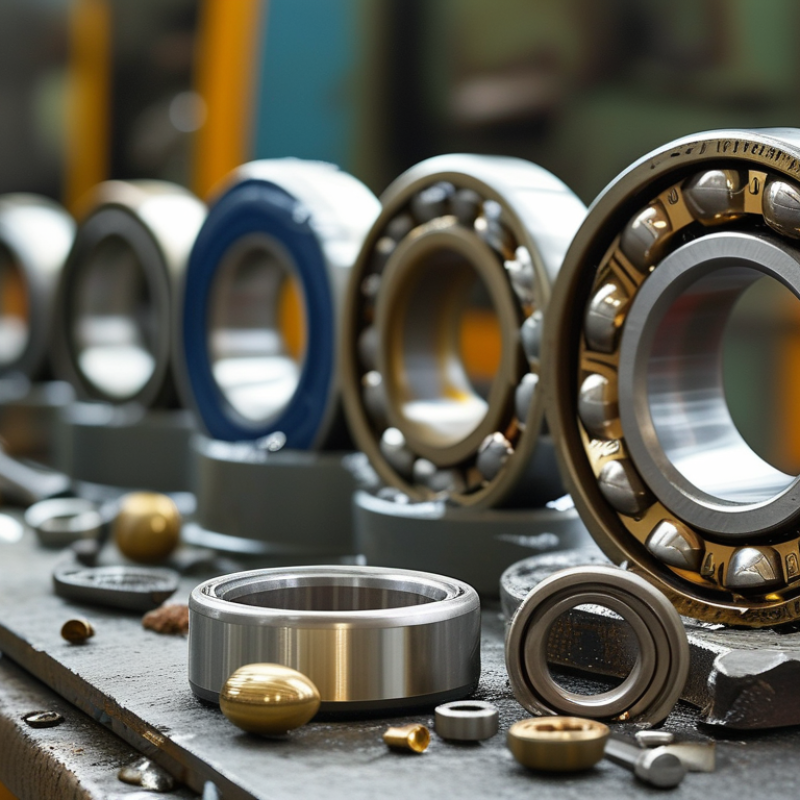
China Top 10 Bearing Brands What Causes Overheating?

China’s Top 10 Bearing Brands and Their Market Roles

China’s top ten bearing brands occupy different market roles, rather than competing in one identical field. Some focus on automotive assemblies, while others serve machine tools, rail systems, wind turbines, or construction equipment. Their strengths often reflect factory scale, testing capacity, regional supply chains, and export experience. A bearing selected for a high-speed spindle may fail quickly in a dusty conveyor system. Application matters.

In factory inspections, overheating usually appears through darkened grease, a sharp odor, or a blue tint on the raceway. Excessive preload is a common cause. Misalignment, insufficient lubrication, contamination, and poor shaft fits also raise temperature. Seals may create additional friction when installed too tightly. A useful check records housing temperature, vibration, grease condition, and operating speed together. One reading is not enough. Experienced technicians often compare the bearing with a similar unit under the same load.

Market reputation should therefore include technical support, traceability, and response after installation. Large suppliers may provide customized heat treatment or sealed designs for demanding equipment. Regional manufacturers can sometimes offer faster delivery and practical engineering adjustments. However, a strong catalog does not guarantee correct performance. I have seen suitable bearings overheat because installation tools damaged the seal. That detail is easy to overlook. Buyers should verify load ratings, clearance, lubrication intervals, and mounting procedures before judging product quality. Independent testing and clear maintenance records make comparisons more reliable. Temperature still tells only part of the story.

Overheating is commonly linked to lubricant degradation, excessive load or speed, incorrect clearance, misalignment, contamination, and seal friction. This engineering reference uses the widely applied rule that grease relubrication intervals should be halved for every 15°C increase above 70°C. The chart is an application-based technical guide and does not represent company or brand market share.

Bearing Design Factors That Influence Operating Temperature

Bearing overheating is often blamed on lubrication, but the design itself sets a thermal limit. Internal clearance controls how much heat appears after expansion. Too little clearance can create preload, while excessive clearance increases vibration and sliding. Both raise heat.

Raceway curvature, rolling element size, and contact angle also matter. A larger contact area can carry load, yet it may increase friction under misalignment. Seals protect against dust and moisture, but their lip contact creates drag. Cage design affects lubricant distribution and high-speed stability. In a workshop inspection, a temperature probe near the outer ring can reveal a gradual rise that hand-touch checks miss. Infrared readings help, but shiny surfaces can mislead them.

Fit and housing geometry deserve equal attention. An overly tight shaft fit reduces internal clearance. A distorted housing can load one side of the raceway. Speed, radial load, axial load, and ambient heat must match the bearing’s design assumptions. I have seen temperature rise after a seemingly minor shaft change. The calculation looked acceptable. The assembly was not. Engineers should record temperature, speed, load, and running time before changing lubricant or replacing parts. Small design errors often become expensive heat.

China Top 10 Bearing Brands What Causes Overheating? - Bearing Design Factors That Influence Operating Temperature

Engineering reference table showing how bearing design variables can affect operating temperature. Values are typical ranges for standard industrial rolling bearings and should be verified against the bearing manufacturer's technical specification for the actual application.

Bearing Design Factor Typical Engineering Range or Reference Value How It Influences Temperature Overheating Risk Practical Design or Selection Guidance
Radial Internal Clearance Normal clearance (CN) is commonly selected for general applications; C3 clearance is typically about 15–30 μm greater than CN for many medium-size bearings, depending on bore size and clearance class. Clearance that is too small can create excessive contact stress and preload after thermal expansion. Excessive clearance can increase vibration, sliding, and uneven load distribution. High Consider shaft and housing interference fits, temperature gradients, and thermal expansion before selecting CN, C3, or another clearance class.
Contact Angle Typical angular-contact bearing contact angles include approximately 15°, 25°, and 40°. A larger contact angle improves axial-load capacity but generally increases sliding and friction under high-speed operation, which can raise heat generation. Medium to High Use the smallest contact angle that satisfies the required axial-load capacity when speed and temperature control are priorities.
Bearing Size and Mean Diameter Speed-related performance is often evaluated using the speed factor n·dm, where dm = (d + D) / 2 and n is rotational speed in revolutions per minute. Larger rolling elements and raceway diameters increase rolling and lubricant churning losses. Heat generation usually rises as rotational speed and mean bearing diameter increase. High Check the limiting speed and recommended speed factor. Avoid selecting a bearing with unnecessary size or excessive rotational speed capability requirements.
Rolling Element Count and Diameter More or larger rolling elements increase static and dynamic load capacity, but may also increase the number of rolling contacts and internal friction. Higher load capacity can reduce contact stress, while additional rolling elements can increase viscous drag and sliding losses, especially at high speed. Medium Balance load capacity against speed requirements. High-speed designs often favor optimized internal geometry rather than simply increasing rolling-element size or count.
Preload Light, medium, and heavy preload levels are commonly used; the actual axial force may range from a few newtons to several hundred newtons depending on bearing size and application. Preload removes internal looseness and improves stiffness, but excessive preload increases contact force, friction torque, and heat generation. High Use the minimum preload that achieves the required stiffness, accuracy, and vibration performance. Recheck preload after thermal expansion and installation.
Raceway and Rolling-Element Surface Finish Precision-ground bearing raceways commonly have an arithmetic average roughness around Ra 0.05–0.20 μm, depending on bearing type and manufacturing grade. Higher roughness increases asperity interaction, lubricant film disruption, friction, and wear. A smoother surface generally supports more stable elastohydrodynamic lubrication. Medium Maintain correct grinding and superfinishing quality, prevent contamination damage, and avoid surface defects that can interrupt the lubricant film.
Seal and Shield Configuration Non-contact shields generally produce less friction than contact seals. Contact seals provide better contamination protection but add seal rubbing torque. Seal lip friction is converted directly into heat. The effect becomes more significant as speed, seal interference, and lubricant viscosity increase. Medium Use non-contact protection where contamination is low and low friction is essential. Use contact seals where ingress protection is more important than minimum temperature rise.
Lubricant Viscosity and Quantity For many grease-lubricated applications, a fill quantity of approximately 25–40% of the free bearing space is common. Oil viscosity selection depends on load, speed, and operating temperature. Too much grease or excessively high oil viscosity increases churning and viscous drag. Too little lubricant can cause metal-to-metal contact and rapid temperature rise. High Select lubricant viscosity using the speed, load, and temperature requirements. Follow the correct fill quantity and allow sufficient running-in time after greasing.
Internal Geometry and Raceway Conformity Optimized osculation, curvature, and rib geometry are designed to distribute load while limiting edge stress and sliding. Poor load distribution or excessive rib-flange sliding increases friction torque and localized heat, especially in roller bearings and heavily loaded angular-contact bearings. Medium to High Match the bearing internal geometry to the load direction, speed, and misalignment conditions. Avoid operating beyond the design load and alignment limits.
Operating Load and Load Distribution Dynamic equivalent load is calculated from radial and axial load components using the bearing's applicable load factors. Higher load increases contact deformation, rolling resistance, and lubricant film demand. Uneven or edge loading can cause localized friction and hot spots. High Verify radial and axial load ratings, minimize misalignment, and check that the actual load is compatible with the selected bearing's dynamic and static capacity.
Operating Environment and Heat Dissipation Temperature rise depends on ambient temperature, housing conductivity, airflow, shaft speed, and nearby heat sources. Even a correctly selected bearing can overheat if heat cannot be transferred away. Poor ventilation and an undersized housing increase steady-state operating temperature. High Provide adequate housing heat transfer, airflow, oil circulation, or external cooling when required. Measure temperature after the system reaches thermal equilibrium.

Note: The listed ranges are indicative engineering values, not universal limits. Actual operating temperature is determined by the combined effects of speed, load, clearance, preload, lubricant, sealing, alignment, installation fit, ambient conditions, and heat dissipation.

Common Mechanical and Environmental Causes of Bearing Overheating

China Top 10 Bearing Brands What Causes Overheating?

Common Mechanical and Environmental Causes of Bearing Overheating

Bearing overheating usually begins with friction, not fire. Excessive preload can squeeze the rolling elements against the raceways. Incorrect clearance may create similar pressure during operation. Misalignment adds uneven load across the bearing surface. A shaft may look straight, yet its coupling can pull it sideways. During inspection, check vibration, temperature, shaft alignment, and mounting torque together.

Lubrication problems are common mechanical causes. Too much grease can churn and raise temperature quickly. Too little lubricant leaves bright wear marks and a dry, sharp odor. The wrong viscosity may fail under high speed or heavy load. Contamination also matters. Fine dust, metal particles, and water can damage surfaces before noise becomes obvious. Keep seals clean, and inspect grease color during scheduled maintenance.

Environmental conditions can push a healthy bearing beyond its limits. High room temperature reduces cooling capacity. Poor airflow around a motor housing traps heat. Moisture encourages corrosion, especially during repeated shutdowns. I once treated a hot bearing as a lubrication issue, but a blocked ventilation grille caused the real problem. That mistake was avoidable. Measure temperature at the housing with a calibrated instrument, then compare readings across operating hours. Sudden increases deserve attention, even when the bearing still sounds normal.

Step-by-Step Methods for Identifying Bearing Heat Problems

When a bearing runs hot, do not replace it immediately. Begin with a safe shutdown and record the operating conditions. Note the temperature, speed, load, noise, and recent maintenance work. A handheld infrared thermometer helps, but measure the housing consistently. Shiny surfaces can produce misleading readings.

Check the lubricant next. Look for a dry film, discoloration, metal particles, or excessive grease around the seals. Too little lubricant increases friction, while too much can also create heat. Confirm the correct lubricant type and quantity from the equipment manual. Then inspect shaft alignment, mounting fit, and nearby components. Misalignment often leaves uneven wear marks on the raceway.

Use vibration readings to support your judgment. Compare current values with previous maintenance records, not only with a general limit. A rising vibration pattern may reveal looseness, imbalance, or internal damage. I once blamed lubrication for overheating, but a loose mounting surface caused the real problem. That mistake was preventable. Recheck the basics.

After correction, run the machine under normal load and monitor temperature at fixed intervals. A temporary rise may occur after relubrication, but the trend should stabilize. If heat continues, stop testing and inspect the bearing internally. Do not touch the housing by hand during operation. Temperature changes can be gradual, and a single reading may hide the actual fault.

Maintenance Practices That Prevent Bearing Overheating

Maintenance Practices That Prevent Bearing Overheating

Bearing overheating rarely begins with smoke. It often starts as a small temperature rise near the housing. During routine maintenance, technicians should check lubrication, shaft alignment, operating load, and seal condition together. Grease that looks clean may still be unsuitable for the speed or temperature. Too much grease creates churning resistance. Too little leaves metal surfaces poorly protected. Use the specified lubricant, quantity, and relubrication interval.

Measure housing temperature with a calibrated infrared device or contact probe. Keep the measurement point consistent. Record readings during similar operating conditions. A rising trend deserves attention, even when the bearing remains below its alarm limit. Check for unusual noise, vibration, loose foundations, and belt tension. Misalignment can generate heat quietly. It may not show obvious damage at first.

Installation practices matter just as much. Clean tools and hands help prevent abrasive particles from entering the bearing. Never strike a bearing ring directly with a hammer. Use suitable fitting tools, and apply force only to the ring being mounted.

Check shaft and housing fits before assembly. A practical inspection may reveal scoring, discoloration, or hardened grease. These signs can be easy to dismiss. That is a mistake I would reconsider after seeing a minor temperature rise become a costly shutdown. Allow newly lubricated bearings to run at low speed briefly, then monitor temperature before returning to full operation.

FAQS

Why do bearing suppliers serve different market roles?

Some focus on automotive assemblies, while others support machine tools, rail systems, turbines, or construction equipment. Application matters. A high-speed spindle bearing may fail in a dusty conveyor system.

What usually causes a bearing to overheat?

Common causes include excessive preload, misalignment, poor lubrication, contamination, and incorrect shaft fits. Tight seals can also increase friction. Dark grease, sharp odors, or blue raceways are warning signs.

How does bearing design affect operating temperature?

Internal clearance controls heat after expansion. Too little clearance may create preload. Too much can increase vibration and sliding. Seals, cages, contact angles, and rolling element size also influence friction.

How should bearing temperature be measured?

Use a calibrated infrared device or contact probe near the outer ring. Keep the measurement point consistent. Record temperature, speed, load, and running time together. One reading is not enough.

What lubrication practices help prevent overheating?

Use the specified lubricant, quantity, and relubrication interval. Too much grease creates churning resistance. Too little leaves metal surfaces poorly protected. Clean grease may still be unsuitable for high speed.

What should technicians inspect during routine maintenance?

Check lubrication, alignment, load, seals, vibration, belt tension, and loose foundations. Look for scoring, discoloration, and hardened grease. A small temperature rise deserves attention.

How can improper installation damage a bearing?

Dirty tools can introduce abrasive particles. Direct hammer strikes may damage rings or seals. Use suitable fitting tools, and apply force only to the mounted ring.

Can a strong product catalog guarantee good performance?

No. Technical support, traceability, testing, and installation guidance also matter. I have seen a suitable bearing overheat after a tool damaged its seal. That detail is easy to overlook.

What should happen after installing fresh lubricant?

Run the bearing briefly at low speed. Monitor temperature before returning to full operation. If the temperature rises steadily, stop and investigate. The calculation may look acceptable. The assembly may still be wrong.

Conclusion

This article examines China’s top 10 bearing brands through their roles in industrial supply, engineering support, product specialization, and market development, without focusing on individual brand names. It also explains how bearing design factors—including load capacity, internal clearance, lubrication requirements, sealing structure, material quality, and operating speed—affect temperature during service. Understanding what causes bearing overheating issues is essential for improving equipment reliability and reducing unexpected downtime.

The article reviews common mechanical and environmental causes of overheating, such as excessive loads, misalignment, improper installation, insufficient or contaminated lubricant, excessive speed, poor ventilation, and surrounding heat. It presents step-by-step methods for identifying heat problems by checking operating conditions, measuring temperature, inspecting lubrication, examining vibration and noise, and evaluating component damage. Finally, it highlights preventive maintenance practices, including correct mounting, scheduled lubrication, cleanliness control, alignment checks, temperature monitoring, and timely replacement of worn parts.

Aria

Aria

Aria is a dedicated marketing professional with a deep passion for innovative strategies and a keen understanding of our company's product offerings. With a wealth of experience in the industry, Aria excels at crafting engaging content that highlights the unique features and benefits of our......