2026 Best Materials for High Performance Bearings

Time:2026-09-24 Author:Aria
0%

Choosing the right bearing material in 2026 requires more than comparing hardness values. Engineers must examine speed, load, temperature, lubrication, contamination, and maintenance access. A bearing inside a high-speed spindle faces different stresses from one supporting a wind turbine shaft.

So, what materials are used in high performance bearings? Common choices include vacuum-melted chrome steel, corrosion-resistant stainless steel, silicon nitride ceramics, and engineered polymers. Hybrid bearings often combine ceramic balls with steel rings. This arrangement can reduce electrical damage and improve performance at high rotational speeds. Silicon nitride is also valued for its low density, hardness, and resistance to heat. However, it is not automatically the best option.

Material behavior changes under real operating conditions. A polished raceway may perform well in a clean test chamber but struggle beside abrasive dust or poor lubrication. In field inspections, small lubricant failures often create larger problems than expected. That detail deserves attention. Coatings such as diamond-like carbon may reduce friction, while bronze and polymer cages can support demanding lubrication environments. Yet coating adhesion, thermal expansion, cost, and manufacturing consistency still require careful verification.

No single material wins every application. The most reliable selection process combines supplier data, application testing, failure analysis, and recognized bearing standards. Designers should question impressive laboratory results and confirm performance at actual speed, temperature, and load. Some emerging materials appear promising, but long-term service evidence remains limited. That uncertainty matters. This guide compares leading options for 2026, highlighting practical strengths, limitations, and the compromises behind dependable high performance bearings.
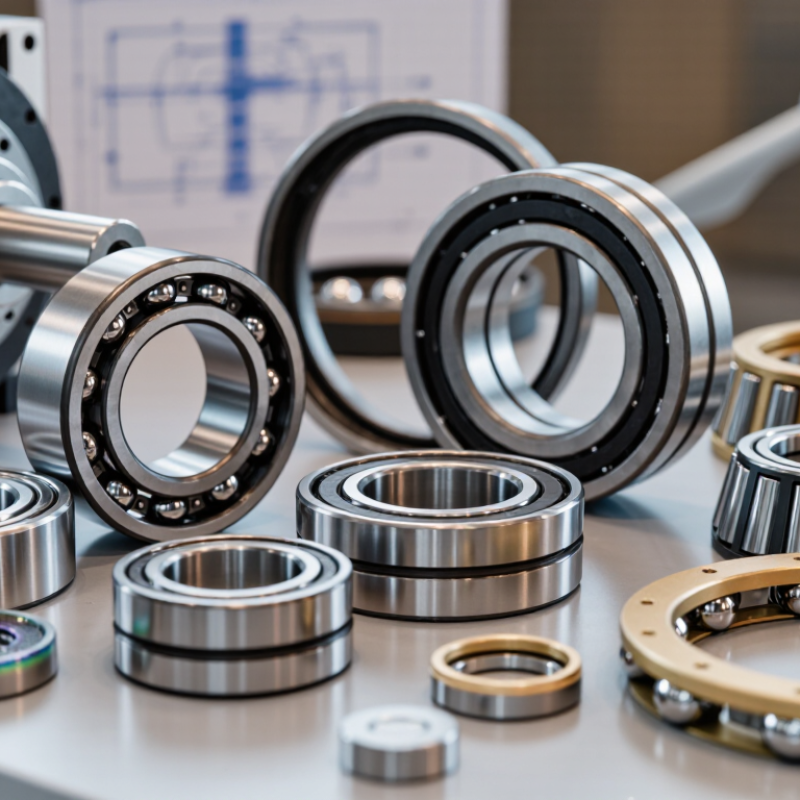
2026 Best Materials for High Performance Bearings

High-Performance Bearing Materials: Definitions and Core Properties

High-Performance Bearing Materials: Definitions and Core Properties

A bearing material is the substance used for rolling elements, raceways, cages, or seals. Its job is to support motion while limiting friction, wear, and heat. In high-performance bearings, material choice depends on load, speed, lubrication, temperature, and exposure to moisture or chemicals. There is no universal best option. A material that performs well in a clean, lubricated spindle may fail quickly in a dusty conveyor.

Hardened bearing steel offers high strength and fatigue resistance, making it common in demanding rolling applications. Ceramic materials, such as silicon nitride, are lighter and can resist heat and electrical current, but they are brittle and require careful handling. Polymers suit some low-load or corrosive environments, though temperature and stiffness limits matter. Key properties include hardness, toughness, dimensional stability, thermal expansion, and resistance to corrosion. In practice, surface finish and lubrication can matter as much as the material itself. It is easy to overlook that.

Tips: Match the material to real operating conditions, not just peak speed. Check load, temperature, contamination, and lubricant compatibility. Ask for test data where possible; published ratings may not reflect your actual setup. A small mismatch can shorten service life.

Material Categories Used in Advanced Bearing Design

Advanced bearing design starts with the operating conditions: load, speed, temperature, lubrication, and contamination. Through-hardened chromium steel remains common for rolling elements and raceways because it combines hardness with fatigue resistance. Case-hardened steels suit designs needing a hard contact surface and a tougher core. Stainless grades can resist moisture, though corrosion resistance does not automatically mean longer fatigue life. Details matter.

Ceramic materials, especially silicon nitride, are used in hybrid bearings with ceramic rolling elements and steel rings. Silicon nitride has a density near 3.2 g/cm³, compared with roughly 7.8 g/cm³ for bearing steel, according to engineering material-property references. Lower rolling-element mass can help at high speeds, but ceramics are less tolerant of impact and edge loading. Polymer and composite cages offer low mass and can operate with limited lubrication, yet temperature and chemical compatibility must be checked against the application.

Material choice is only part of the design. ISO 281 defines basic bearing rating life at 90% reliability; that benchmark depends on load and bearing rating, not material alone. A harder alloy may resist indentation but can be less forgiving under shock. In practice, a clean lubricant film and sound fits can matter as much as a premium material. Engineers sometimes overvalue headline hardness. That deserves a second look.

How Operating Conditions Determine Bearing Material Selection

2026 Best Materials for High Performance Bearings

How Operating Conditions Determine Bearing Material Selection

Bearing material selection starts with the load, speed, temperature, and lubricant—not a catalogue ranking. Under heavy, steady loads, hardened chromium-bearing steel is often practical because it combines high hardness with fatigue resistance. ASM Handbook material-property tables place its density near 7.8 g/cm³. Silicon nitride is much lighter, at roughly 3.2 g/cm³, which can reduce centrifugal forces in fast-running bearings. But low mass alone does not guarantee longer service life.

Temperature changes the trade-offs. In a hot, poorly lubricated housing, a conventional steel bearing may lose hardness or suffer surface damage. Heat-resistant steels or ceramic rolling elements may be more suitable, depending on the full assembly. ISO 281:2007 calculates basic rating life from bearing load and dynamic load rating; it does not make material a substitute for correct sizing. Small changes in shaft alignment can still create uneven contact and early failure.

Moisture and corrosive process fluids call for corrosion-resistant steels, while abrasive dust may demand better sealing before a more exotic material. That detail is easy to overlook. In field inspections, a shiny raceway can hide lubricant starvation; look for discoloration, fine scoring, and heat marks. Material data offer a starting point, not a field diagnosis. Even a technically impressive ceramic-steel combination can underperform if fits, lubrication, or contamination control are wrong. Choosing a material means matching test data to the actual duty cycle—and admitting when operating data are incomplete.

Comparing Wear, Heat, Corrosion, and Load Resistance

Choosing a bearing material means balancing wear, heat, corrosion, and load—not chasing one impressive specification. High performance is application-specific. In a fast spindle, heat and dimensional stability may matter most; in a washdown pump, corrosion resistance can dominate. Hardened bearing steel handles substantial loads and offers reliable wear resistance when lubrication and cleanliness are controlled. Ceramic rolling elements can reduce friction and tolerate higher speeds, but they are brittle under impact.

Heat changes the comparison. Steel bearings can lose hardness if temperatures exceed their rating, while suitable ceramics retain strength at elevated temperatures. Yet ceramic does not automatically mean cooler: seal drag, preload, and lubricant choice also generate heat. Corrosive fluids challenge ordinary steel, so stainless grades or ceramic components may be preferable. Polymer bearings resist many chemicals and can run quietly, though their load capacity and temperature limits are often lower. Bronze can work well in sliding applications, but it is not a universal substitute for rolling bearings.

Load resistance depends on more than the material name. Contact stress, shaft alignment, surface finish, and shock loads all affect service life. A harder surface may resist wear but still fail if impact causes cracking. That trade-off is easy to overlook. Compare the actual operating temperature, lubricant, contamination, and peak load against tested ratings, then inspect the bearing for heat discoloration, scoring, or uneven wear. One detail often changes the choice.

2026 Best Materials for High Performance Bearings - Comparing Wear, Heat, Corrosion, and Load Resistance

Typical material-level comparison for bearing components. Actual performance depends on bearing design, heat treatment, lubrication, surface finish, fit, operating speed, and environment. Temperature ranges are indicative and are not guaranteed continuous-use limits.

Bearing material Wear resistance Heat capability Corrosion resistance Load resistance Common strengths and trade-offs
Through-hardened 52100 chromium bearing steel High with suitable lubrication and clean operating conditions Typically suited to conventional bearing temperatures; hardness can decline if overheated or improperly tempered Low; requires protection from moisture and corrosive media Very high A common choice for high-load rolling bearings. Strong fatigue performance, but vulnerable to rust and contamination.
440C martensitic stainless steel High when hardened and properly finished Suitable for many moderate-temperature applications; temperature limits depend on heat treatment and lubricant Moderate; better than 52100 in many damp settings, but not immune to pitting or aggressive chemicals High, generally below comparable 52100 bearing steel Useful where hardness and some corrosion resistance are both needed. Not the best choice for severe chloride exposure.
316 austenitic stainless steel Low to moderate in rolling-contact applications; relatively soft compared with hardened bearing steels The alloy tolerates elevated temperatures, but bearing performance also depends on hardness, clearance, and lubrication High in many wet and mildly corrosive environments; performance varies with chemical concentration and exposure Low to moderate for rolling-element raceways Prioritizes corrosion resistance over hardness and fatigue capacity. Often more appropriate for low-load or corrosion-focused duties than heavily loaded raceways.
Silicon nitride ceramic Very high hardness and abrasion resistance; contact design and lubrication remain important High material heat capability; the assembled bearing may be limited by cage, lubricant, seals, and steel components Very high in many aqueous and chemical environments High compressive capacity, but brittle; impact and edge loading require care Low density and electrical insulation make it useful in hybrid bearings and demanding high-speed applications. Higher cost and brittleness are key trade-offs.
Zirconia ceramic High, though generally not as hard as silicon nitride Good for many elevated-temperature duties; thermal cycling and the full bearing assembly affect practical limits Very high in many corrosive environments Good compressive capacity and greater fracture toughness than many conventional ceramics; still less tolerant of impact than steel A corrosion-resistant insulating option. Consider temperature-dependent material behavior and avoid assuming it is impact-proof.
PEEK engineering polymer Good in suitable polymer-bearing designs; wear depends strongly on grade, counterface, and lubrication Can serve in elevated-temperature polymer applications, but sustained temperature capability depends on grade, load, and design High against many chemicals; compatibility should be checked for the specific fluid and temperature Low to moderate versus hardened metals or ceramics; polymer deformation and creep can matter under sustained load Lightweight and electrically insulating, with useful chemical resistance. Best suited to selected low-to-moderate-load applications rather than maximum-load rolling bearings.

Selection note: Verify load ratings, speed limits, lubrication, temperature range, and chemical compatibility against the specific bearing design and operating conditions. Material properties alone do not determine bearing life.

Emerging Materials and Future Trends in Bearing Performance

2026 Best Materials for High Performance Bearings

Emerging Materials and Future Trends in Bearing Performance

High-performance bearings are moving beyond conventional bearing steel. Hybrid designs combine hardened steel rings with silicon nitride rolling elements. This pairing reduces weight, electrical damage, and friction during high-speed operation. Ceramic elements also produce less heat under demanding loads. However, they can be less forgiving when contamination enters the contact zone.

New cage materials are changing design choices. PEEK offers low mass, chemical resistance, and stable performance across wide temperature ranges. Advanced polymer composites may reduce noise in medical, aerospace, and precision equipment. Surface-engineered steels are also gaining attention. Their refined grain structures and protective coatings can improve fatigue resistance. Still, coating life depends heavily on surface preparation and lubrication quality. No material wins everywhere.

Future development will likely combine material science with embedded monitoring. Conductive ceramics and smart coatings may help detect wear before failure. Additive manufacturing could create lighter cages and controlled internal channels. Yet these options need longer field validation. Some promising results remain too sensitive to humidity, alignment, or installation errors. That uncertainty deserves attention before large-scale adoption.

FAQS

Which material is commonly used for bearing raceways and rolling elements?

Through-hardened chromium steel is common because it combines hardness with fatigue resistance. It suits many steady, demanding loads.

Why are ceramic rolling elements used in some bearings?

Silicon nitride is much lighter than bearing steel, which can reduce centrifugal forces at high speeds. Its density is about 3.2 g/cm³, compared with roughly 7.8 g/cm³ for steel. Speed is not the whole story.

Are ceramic rolling elements suitable for impact-heavy applications?

Not always. Ceramics are less tolerant of impact and edge loading than steel. A sharp shock or misaligned contact may create problems.

When might corrosion-resistant steel be a better choice?

It can suit equipment exposed to moisture or corrosive process fluids. But corrosion resistance alone does not promise longer fatigue life.

What should engineers check when selecting a bearing for high temperatures?

Consider the housing temperature, lubrication, and full assembly. Heat-resistant steel or ceramic elements may help, but poor lubrication can still damage surfaces.

Can a harder material prevent early bearing failure?

Not by itself. Hardness may reduce indentation, yet a harder alloy can be less forgiving under shock. Fits and alignment matter too.

What signs may point to lubrication or heat problems?

Look for discoloration, fine scoring, and heat marks on inspected surfaces. A shiny raceway can still hide lubricant starvation.

Does bearing material determine its rated life?

No. ISO 281 bases basic rating life on bearing load and dynamic load rating, at 90% reliability. Material is only part of the design, and missing duty-cycle data can leave the choice uncertain.

Conclusion

Choosing the best materials for high-performance bearings in 2026 starts with understanding the demands placed on each component. The question of what materials are used in high performance bearings has no single answer: common options include specialized steels, stainless alloys, ceramics, and engineered polymers. Each offers a different balance of strength, hardness, weight, temperature tolerance, and resistance to corrosion or wear.

Material selection depends on operating speed, load, lubrication, surrounding environment, and maintenance needs. Steel can provide dependable load capacity, while ceramic materials may suit applications requiring low weight, high-speed operation, or heat resistance. Polymers can be useful where corrosion resistance and reduced friction matter. Comparing these properties helps designers match a bearing to its conditions rather than relying on one material for every use. Ongoing advances in material engineering and hybrid designs are also expanding options, with future development focused on improving durability, efficiency, and performance across demanding applications.

Aria

Aria

Aria is a dedicated marketing professional with a deep passion for innovative strategies and a keen understanding of our company's product offerings. With a wealth of experience in the industry, Aria excels at crafting engaging content that highlights the unique features and benefits of our......